
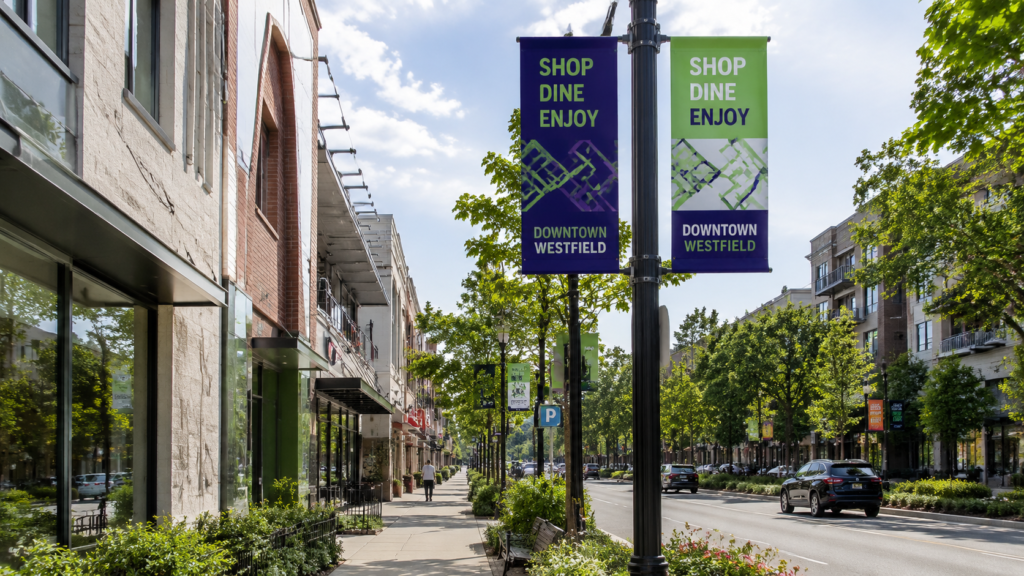
A busy street pulls attention in many directions cars passing by, overlapping conversations, and storefronts competing for notice. Yet sometimes, something stands out without forcing it. A row of well-placed light pole banners does exactly that. They don’t interrupt the flow; they create consistency, and when used effectively, that repetition leaves a lasting impression.
You’ve likely noticed this effect, even if you didn’t name it. A festival is announced weeks in advance. A campus welcoming new students. A retail district quietly reinforcing its identity. The message isn’t loud. It’s consistent, and that consistency builds recognition over time.
- Light pole banners offer steady, repeated visibility in high-traffic areas.
- Material and printing method directly affect longevity and color retention
- Strong design choices often outperform complex ones in outdoor settings.
- Maintenance planning extends campaign value more than most expect
The Impact and Benefits of Light Pole Banners
At a basic level, light pole banners are vertical displays mounted along streets, walkways, or event spaces. Although they are vertical displays mounted along streets, walkways, or event spaces, that definition doesn’t fully explain their value.
They function as environmental branding.
Placed at regular intervals, they create a visual rhythm. That rhythm reinforces memory. It’s subtle, but over days or weeks, it builds familiarity with a message, a place, or a brand.
A clear way to think about it:
Light pole banners are a form of outdoor repetition-based branding that increases visibility through consistent placement rather than one-time exposure.
Additionally, there’s a practical advantage. Unlike digital ads that disappear in seconds, these banners stay in place. They work continuously, without requiring interaction.
Research from the Outdoor Advertising Association of America suggests that out-of-home advertising reaches 90% of the U.S. population weekly.
While that figure covers more than banners alone, it points to a broader truth. Outdoor visuals still hold attention in ways many digital formats struggle to maintain.
Still, not everything about them is perfect; weather exposure, installation costs, and design missteps can reduce effectiveness. It’s not a guaranteed win. But when done thoughtfully, the return often justifies the effort.
Why Screen Printing Wins for Outdoor Durability
Not all banners are built the same. And that difference becomes obvious after a few weeks outdoors.
Screen printing’s outdoor durability tends to outperform many alternatives, especially in long-term installations. The reason isn’t just the ink, it’s how the ink bonds with the material.
Instead of sitting on the surface, screen printing pushes ink deeper into the fabric or substrate, creating a stronger hold. Less fading. Better resistance to UV exposure.
You’ll notice it over time: colors stay richer, edges don’t blur as quickly, and even under constant sunlight or wind, the design maintains its integrity.
That said, screen printing isn’t always the default choice. For short campaigns or highly detailed designs, other methods may work better. But for extended outdoor use, it’s often the more reliable option.
The Screen Printing Process for Banners
Understanding the screen printing banner process helps clarify why durability improves.
The process is straightforward, but each step matters.
Typical process flow:
- Design is separated into individual color layers
- Screens are prepared for each color
- Ink is pressed through the screens onto the material
- Layers are built one at a time, and the banner is then cured to set the ink permanently.
Each layer adds depth, because the process is physical rather than purely digital, the final result often feels more substantial.
There’s a trade-off, though. Setup takes time. That’s why it’s usually better suited for bulk production rather than small, one-off prints.
Customization Options and Design Considerations
A banner’s effectiveness rarely comes down to size alone. Design decisions tend to matter more.
Custom light pole banners perform best when they account for distance and movement, since people rarely stop to read them and are usually passing by quickly.
So, what tends to work?
- Bold typography that remains legible from a distance
- Limited color palettes to avoid visual clutter
- Clear hierarchy, one message at a time
- High contrast between text and background
Overloading a banner with information is a common mistake; it may feel productive during design, but outdoors, it usually backfires.
There’s also the question of branding consistency. Logos, colors, and tone should align with other materials. Otherwise, the banners feel disconnected rather than reinforcing identity.
Interestingly, simpler designs often perform better not because they’re minimal for the sake of it, but because they respect how people actually see things in motion.
Real-World Success: Banner Campaign Case Studies
Not every campaign needs a formal case study to illustrate impact. In practice, patterns tend to repeat across different environments.
Consider a familiar scenario.
A mid-sized downtown district wants to increase foot traffic during seasonal events. They install coordinated light pole banners along main streets and intersections.
Strategy:
- Consistent color theme tied to the season
- Repeated messaging across multiple blocks
- Placement at eye level along pedestrian routes
Observed outcomes:
- Improved visual cohesion across the district
- Increased event awareness without additional advertising channels
- Stronger sense of place for visitors
There were no dramatic spikes or overnight transformations, but the area felt noticeably more intentional and unified.
That’s often how banner campaigns succeed. Quietly, over time.
Maintenance and Maximizing Longevity
Light pole banner maintenance doesn’t get much attention early on, but it probably should.
Outdoor materials face constant stress from sunlight, wind, rain, and even pollution. Without proper maintenance, their lifespan can shorten faster than expected.
A few practical considerations help:
- Periodic inspections for tears or loose hardware
- Cleaning to remove dirt buildup that dulls colors
- Rotating banners in long campaigns to distribute wear
- Storing off-season banners properly to avoid damage
Skipping these steps might not show immediate consequences, but over months, the decline becomes visible.
Below is a simple reference for maintaining banner quality:
| Maintenance Task | When It Helps Most | Simple Cue | Common Mistake |
| Visual inspection | Monthly | Check edges and grommets | Waiting for visible damage |
| Cleaning | Every few weeks | Colors look dull | Using harsh chemicals |
| Rotation | Mid-campaign | Uneven fading | Leaving banners fixed too long |
| Storage | Off-season | Folding carefully | Storing while damp |
It’s simple, but often overlooked.
Conclusion: A Smart Investment for Your Brand
Calling light pole banner investment ‘simple’ would be misleading, as there are design choices, production methods, and logistical details to manage.
But when all those elements align, the outcome tends to feel effortless.
Consistent visibility, reinforced messaging, and a stronger physical presence.
That’s where organizations often see value. The value is not in immediate conversion metrics but in long-term recognition the kind that builds quietly and pays off later.
For those considering a full-service approach, partnering with a company like Project Graphics can simplify the process. From concept development to large-format production, having design and manufacturing under one roof tends to reduce friction and improve consistency across campaigns.
FAQs
How long do screen-printed light pole banners last?
They can last several months to a few years, depending on material, weather exposure, and maintenance. Screen printing generally extends a banner’s lifespan compared to surface-level printing methods.
Do I need a permit to install light pole banners?
In many cities, yes. Local regulations often require permits, especially for public streets or municipal poles. It’s best to check with the relevant authority before installation.
Are wind slits necessary?
They may help reduce wind resistance, but they’re not always required. In some cases, reinforced materials or proper tensioning can achieve similar results without slits.
What makes a good light pole banner design?
Clarity matters most. A strong design uses bold text, limited colors, and a single clear message that remains readable from a distance.
When should you hire professional banner services?
If the campaign involves multiple locations, long-term outdoor exposure, or brand consistency requirements, professional services tend to provide better results and fewer production issues.