
What separates a decent print job from one that actually holds up in the real world?
A banner goes up for an outdoor event. It looks sharp on day one. By day four, the colors have dulled, edges start to curl, and the message loses impact. The issue usually isn’t design. Its execution. More specifically, the quality of the screen printing services behind it.
This gap between expectation and reality is where most buyers get stuck.
- Not all screen printing services deliver the same durability or color accuracy
- Ink type, material choice, and process control matter more than most buyers expect
- Pricing often reflects setup complexity, not just quantity
- Choosing the right provider is less about cost and more about consistency over time
What Are Screen Printing Services?
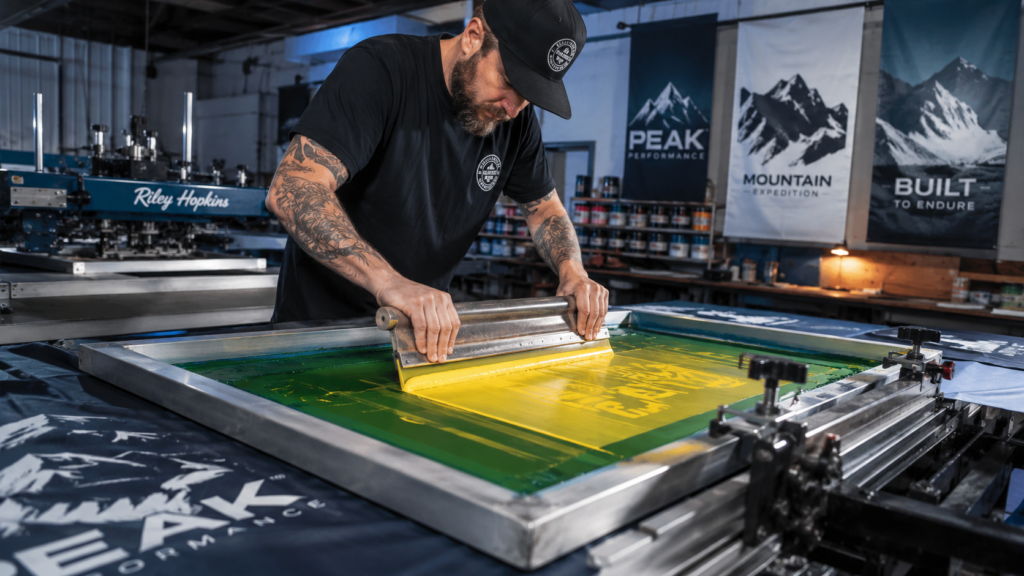
Screen printing services refer to a printing method where ink is pushed through a mesh screen onto a surface, creating durable, high-opacity designs suitable for textiles, signage, and promotional materials.
While simple in theory, screen printing is less simple in practice.
The Core Benefits of Screen Printing
There’s a reason screen printing services haven’t been replaced, even with digital alternatives gaining ground. The method still solves a few problems better than anything else.
What Are Screen Printing Services?
Screen printing services refer to a printing method where ink is pushed through a mesh screen onto a surface, creating durable, high-opacity designs suitable for textiles, signage, and promotional materials.
While simple in theory, screen printing is less simple in practice.
The Core Benefits of Screen Printing
There’s a reason screen printing services haven’t been replaced, even with digital alternatives gaining ground. The method still solves a few problems better than anything else.
Color saturation stands out immediately. Ink sits on top of the material rather than soaking in, which gives prints a certain density you can feel.
Durability follows close behind. When done properly, prints don’t just look good initially; they hold up through repeated washing, outdoor exposure, and friction.
It’s also more cost-effective at scale, though this may not be obvious upfront, especially when setup fees appear high. But over larger runs, the per-unit cost drops significantly.
There’s one more advantage that often gets overlooked: Material flexibility. Fabric, vinyl, metal panels, even rigid boards. Screen printing adapts.
That said, it’s not flawless: small runs can feel expensive, and complex multi-color designs increase setup time. Screen printing works best when the volume justifies the effort.
Exploring Types of Screen Printing Inks
Ink selection shapes the outcome more than most buyers realize.
Different types of screen printing inks behave differently under pressure, heat, and exposure.
- Plastisol ink remains one of the most widely used options. It sits on top of fabric and delivers strong color, but may feel heavier
- Water-based ink absorbs into the fabric, creating a softer finish but sometimes less opacity on dark surfaces
- Discharge ink removes dye from the fabric and replaces it with pigment, producing a smooth, almost embedded look
- Specialty inks, such as puff or metallic, are used sparingly for visual impact
The choice isn’t purely aesthetic. It affects longevity, texture, and even how a garment feels after ten washes.
A good provider won’t default to one ink type. They’ll match it to the use case.
The Screen Printing Process: Design to Final Product
Understanding the screen printing process step by step helps explain why quality varies so much.
How screen printing works (simplified):
- Artwork is separated by color layers
- Each color is transferred to its own mesh screen
- Ink is pressed through the screen onto the material
- Layers are built one at a time
- The print is cured using heat to lock in durability
That’s the clean version.
In reality, registration alignment, curing temperature, and screen tension all introduce variables. A slight misalignment can blur edges. Improper curing can cause cracking later.
Environmental factors like heat and humidity can affect material stability during printing processes, which is why precise curing is important.
Even small inconsistencies can compound over large production runs, affecting overall quality.
Understanding Pricing Models and Cost Factors
The screen printing pricing model tends to confuse buyers. It rarely follows a simple per-unit structure.
Here’s a clearer breakdown:
| Cost Factor | What It Means in Practice |
| Setup Fees | Charged per design and color screen |
| Quantity | Higher volume reduces per-unit cost |
| Number of Colors | Each color adds complexity and cost |
| Material Type | Fabric vs rigid surfaces changes pricing |
| Ink Type | Specialty inks cost more than standard ones |
| Finishing Requirements | Folding, packaging, or coatings add to the cost |
Bulk orders often appear expensive upfront, but scale efficiently.
One common misconception is that screen printing is always the cheapest option. It isn’t. It becomes economical only when volume aligns with setup effort.
How to Choose a Screen Printing Service Provider
Choosing well isn’t about scanning price quotes. It’s about evaluating process reliability.
When assessing how to choose a screen printing company, a few signals tend to stand out:
- Do they first ask about your use case, or do they jump straight to pricing?
- Can they explain ink choices clearly, not just list options?
- Do they provide samples or past project references?
- Is their turnaround realistic or overly optimistic?
A strong provider treats production like a system, not a transaction.
Another subtle indicator is consistency in finishes. Uneven prints often signal rushed curing or poor screen calibration.
It may be worth paying slightly more for predictability.
Maintenance and Care for Screen-Printed Items
Even the best prints will degrade without proper handling, so following care guidelines is essential.
A basic screen printed garments care guide can extend lifespan significantly:
- Wash inside out to reduce surface friction
- Use cold water instead of hot cycles
- Avoid aggressive detergents
- Skip high heat drying when possible
These small habits make a significant difference
Many complaints about fading prints actually trace back to improper care rather than production flaws.
Success Stories: Screen Printing Case Studies
Real-world applications reveal how screen printing services perform under pressure.
Case Scenario 1: Outdoor Event Branding
A municipal event required hundreds of pole banners exposed to the sun and wind. Lower-cost digital prints faded within weeks. Switching to screen printing with UV-resistant inks extended visibility across the full season.
Case Scenario 2: Retail Merchandise
A retail brand produced a clothing line with intricate designs. Initial digital prints lacked vibrancy on dark fabrics. Screen printing improved color depth and consistency across batches.
Case Scenario 3: Sponsorship Campaign
A national sponsorship rollout needed identical branding across multiple locations. Screen printing ensured uniform color matching across banners, table covers, and display backdrops.
“These cases suggest a simple truth: consistency scales, and shortcuts do not.”
Common Misconceptions Worth Questioning
A few ideas about screen printing services sound reasonable, but don’t always hold up.
“Digital printing is always better for detail.”
Not necessarily. Screen printing can produce sharp edges when properly aligned.
“All inks behave the same.”
They don’t. The wrong ink can ruin both appearance and durability.
“Cheaper vendors save money.”
Sometimes. But reprints, replacements, and brand inconsistency often cost more in the long run.
Conclusion
Choosing between screen printing services isn’t really about the printing method itself. It’s about control. Control over materials, process, and outcomes.
The difference shows up later. After the tenth wash. After weeks in the sun. After repeated use in real conditions.
That’s when the right decision becomes obvious.
Where Print Quality Meets Long-Term Reliability
For organizations that require consistency across events, retail environments, or branded campaigns, Project Graphics offers a structured approach that combines design support, multiple printing technologies, and durable material selection.
Rather than treating each order as a standalone job, their process is built around long-term usability and brand consistency. From large-format banners to custom display systems, the focus remains on outputs that hold up under real-world conditions.
Frequently Asked Questions (FAQs)
Is screen printing cheaper in bulk?
Yes, generally. Setup costs are spread across larger quantities, reducing per-unit pricing.
Can I print on items other than t-shirts?
Absolutely. Screen printing works on banners, signage, promotional displays, and rigid materials.
What is a setup fee?
It covers preparing screens for each color in a design. More colors usually mean higher setup costs.
What makes a good screen printing service provider?
Consistency, material knowledge, and process control tend to matter more than pricing alone.
When should a business choose screen printing over digital printing?
When durability, color vibrancy, and large production runs are priorities, screen printing often makes more sense.